Low Pressure or a Soggy Yard? Water Line Repair in Harleysville
The first sign of a failing water line is usually something small: pressure that has slowly dropped, a wet patch in the lawn that never dries, or a water bill that keeps climbing. The water line is the pipe that carries water from the street or the main to your house, and it fails where it cannot be seen.
- Licensed and insured plumbers
- Same-day service when available
- 24/7 emergency dispatch
What the water line is and how it fails
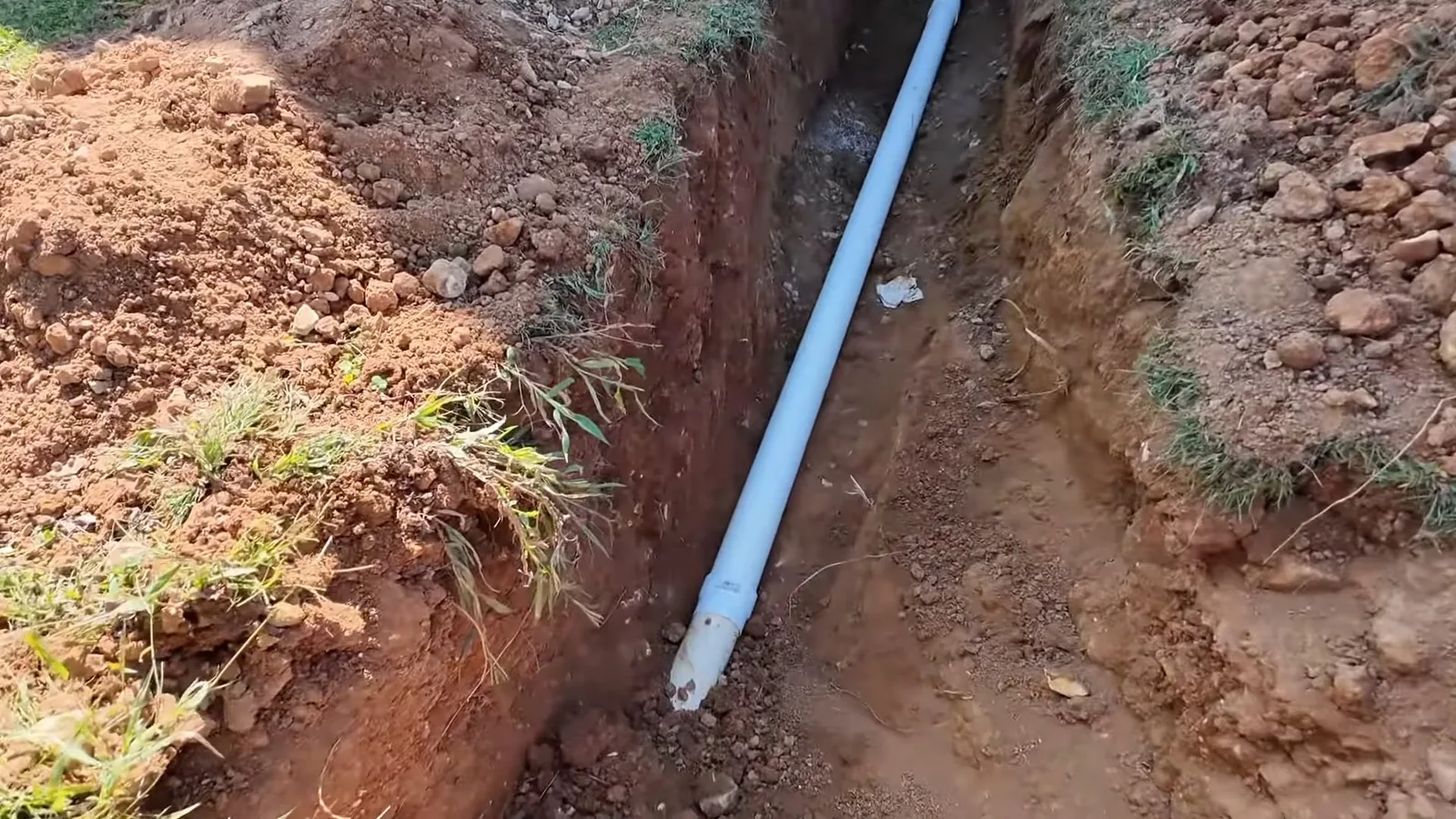
The water line, also called the service line, runs from the utility connection to the shut-off valve or meter inside your house. It is buried, so you rarely see it. Over time the pipe can corrode, crack from shifting soil or tree roots, or fail at a joint. A small leak can run for months before it appears at the surface.
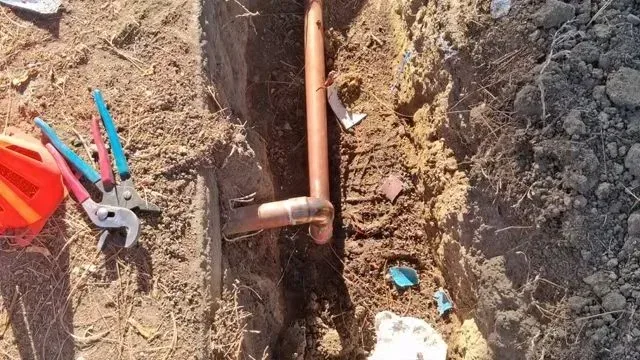
Where the line connects to the house, and where it meets the municipal main, there are often valves and fittings that fail first. A plumber can trace the line, find where it is wet and decide whether a spot repair or a longer replacement makes sense.
Signs you have a water line problem
- Low pressure at every fixture, not just one.
- A wet or unusually green patch in the yard, or a soft spot in a driveway.
- A water meter that keeps moving when every fixture is off.
- The sound of running water in the walls or near the entry point.
- A sudden jump in the water bill with no change in use.
- Discolored water after a pressure change.
Check the meter first. With every tap off and the dishwasher and washer idle, a moving dial or a spinning low-flow indicator means water is leaving the system somewhere. If it is leaving beyond the meter on your side, the water line or a hidden pipe is the likely cause.
Meter still moving with every tap off?
Call and tell dispatch what the meter shows. A plumber can plan a visit to trace the line.
Water line replacement: methods and what to expect
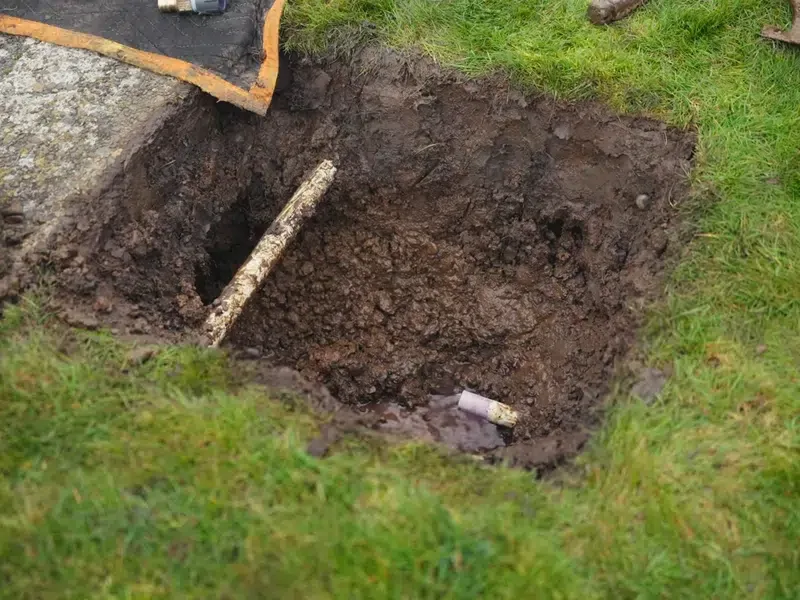
Replacement means installing new pipe from the connection point to the house. The traditional method is an open trench, which is simple but disturbs the lawn, the driveway or the walk above the line. Trenchless methods pull a new pipe along the old path from a small entry pit, which leaves more of the yard intact when the route allows it.
| Method | Suits | Considerations |
|---|---|---|
| Open trench | Short runs, easy access, clear yards | Digs up the surface above the line |
| Pipe pulling | Longer runs under lawns or walks | Needs entry and exit pits and a suitable route |
| Spot repair | One identified break in sound pipe | Leaves the rest of the pipe in service |
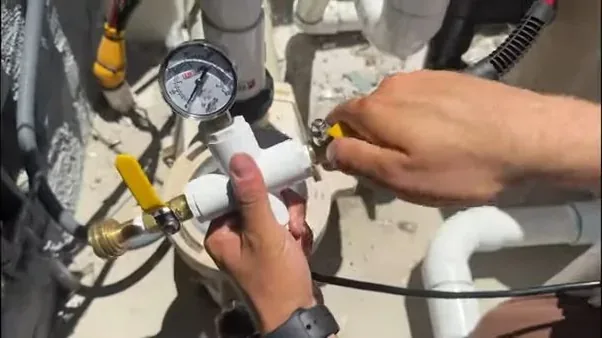
Pressure testing of the line, before and after the work, shows whether the pipe holds. Before digging, the plumber marks the line and, as required, arranges for utilities to be located. Municipal rules and the water provider decide who may connect to the main, so some of the work is handled by the utility and some by a plumber on your side of the connection.
Repair when the break is limited
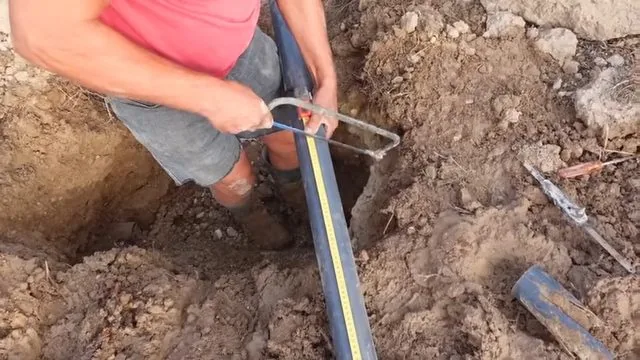
If the pipe is sound apart from one failure, a spot repair is reasonable. A plumber excavates at the break, cuts out the damaged piece and installs a coupling or a new section. The danger is a line with several weak points, where each repair is quickly followed by another failure a few feet away.
Ask the plumber to look at the pipe on both sides of the break. If it is thin, heavily corroded or a material known for failing, replacement is more sensible than patching, and doing it in one trench saves repeated digging.
Pressure regulators, shut-off valves and the meter area
Many water problems start at the entry point rather than in the buried line. A failed pressure reducing valve can send excessive pressure through the house, which strains fixtures and the water heater. A shut-off valve that will not close completely turns a small repair into a shutdown of the whole house.
- High water pressure shows as banging pipes, leaking fixtures and a relief valve that drips.
- Low pressure from a regulator can look just like a leaking line, so check the regulator before digging.
- A main shut-off that is stiff or corroded should be replaced before an emergency, not during one.
- The meter belongs to the utility; the plumber works on the house side of it.
Soil, drainage and tree roots
Soil movement and drainage affect buried pipe. Clay holds water against a line, sandy soil shifts, and roots seek out the moisture around a small leak and then crush or crack the pipe. After heavy rain a leak can be hard to distinguish from ordinary wet ground, so the plumber verifies with pressure tests and listening gear.
If the line shows signs of root damage, a plumber can often confirm by checking where the pipe passes near large trees. Your sewer lateral is a separate pipe, but the sewer line repair page explains how the same roots can threaten the drain side.
Permits and the municipal connection
A water line replacement often touches the public right of way and the utility's connection. The utility behind your tap varies by address: North Penn Water Authority covers some towns here, and other providers cover the rest. Every utility has its own rules for tapping and inspecting a connection.
The municipality may also want a permit for the excavation or the pipe itself. Phone the local office and your water provider before the trench is opened, and let the plumber know what they said so the schedule includes any inspection.
Other pipe problems in the same area
If the problem proves to be inside the house rather than outside, the repiping and pipe repair page covers supply pipe, and the leak detection page covers locating hidden leaks without opening walls. A plumber can use both approaches in one visit.
Ready to have the water line checked?
Call and describe the pressure, the meter reading and any wet spots you have found.
Water line questions
How can I tell whether the leak is on my side of the water meter?
Shut off the main valve inside the house and watch the meter. If it still moves, the leak is between the meter and the house. If it stops, the leak is inside, and a plumber can narrow it down.
Who is responsible for the water line, the homeowner or the water provider?
The provider normally owns the main and the connection, while the homeowner owns the pipe from the connection to the house. The exact boundary varies, so ask your provider before work starts.
Can a water line be replaced without digging up the whole yard?
Sometimes. Trenchless pulling needs only small pits at each end if the route is clear, while a short run with easy access may be simplest as an open trench. A plumber can say which suits the site.
Why did my water pressure suddenly drop?
A leak, a failing pressure regulator, a partly closed valve or a clogged fixture can all do it. If every tap is weak, start with the regulator and the main valve, and call a plumber if those are fine.
Pressure dropping or a wet spot in the yard?
Describe what you see and dispatch will plan a visit to find the cause.
- Licensed and insured plumbers
- Same-day service when available
- 24/7 emergency dispatch