
Hidden Water Leak? Emergency Leak Detection for Harleysville Homes
Call and dispatch asks three things: where the water is showing, whether it is still running and whether you can reach the shut-off. Those answers decide if a plumber serving your area comes out for an urgent leak or books a detection visit for a slow, hidden one.
- Licensed and insured plumbers
- Same-day service when available
- 24/7 emergency dispatch
Leak repair when water is already showing
Small leaks are the easiest to catch early, and ignoring them is how a damp patch becomes rotted framing. A leak announces itself in small ways before it floods anything. A brown ring spreads across a ceiling, paint bubbles above a baseboard, a cabinet floor feels soft, or the house hums with a sound of running water when every tap is off. Any of those is worth a call the same day, because water inside a wall or floor spreads sideways and downward long before it becomes obvious.
The first question is whether the leak is on a supply line or a drain. Supply lines hold pressure, so they leak all day and all night. Drain lines only leak when something is draining, which is why a stain that grows after a shower but dries out overnight points toward a drain, a tub seal or a trap.
- Close the fixture's own shut-off if you can reach one, or the main valve if you cannot.
- Put a bucket or towels under the drip and move anything valuable out of the splash zone.
- Switch off power to any room where water is coming through a light fixture or outlet.
- Take photos of the stain and its edges, and note the time, so the plumber can see whether it has grown.
Leak detection services for pipes you cannot see
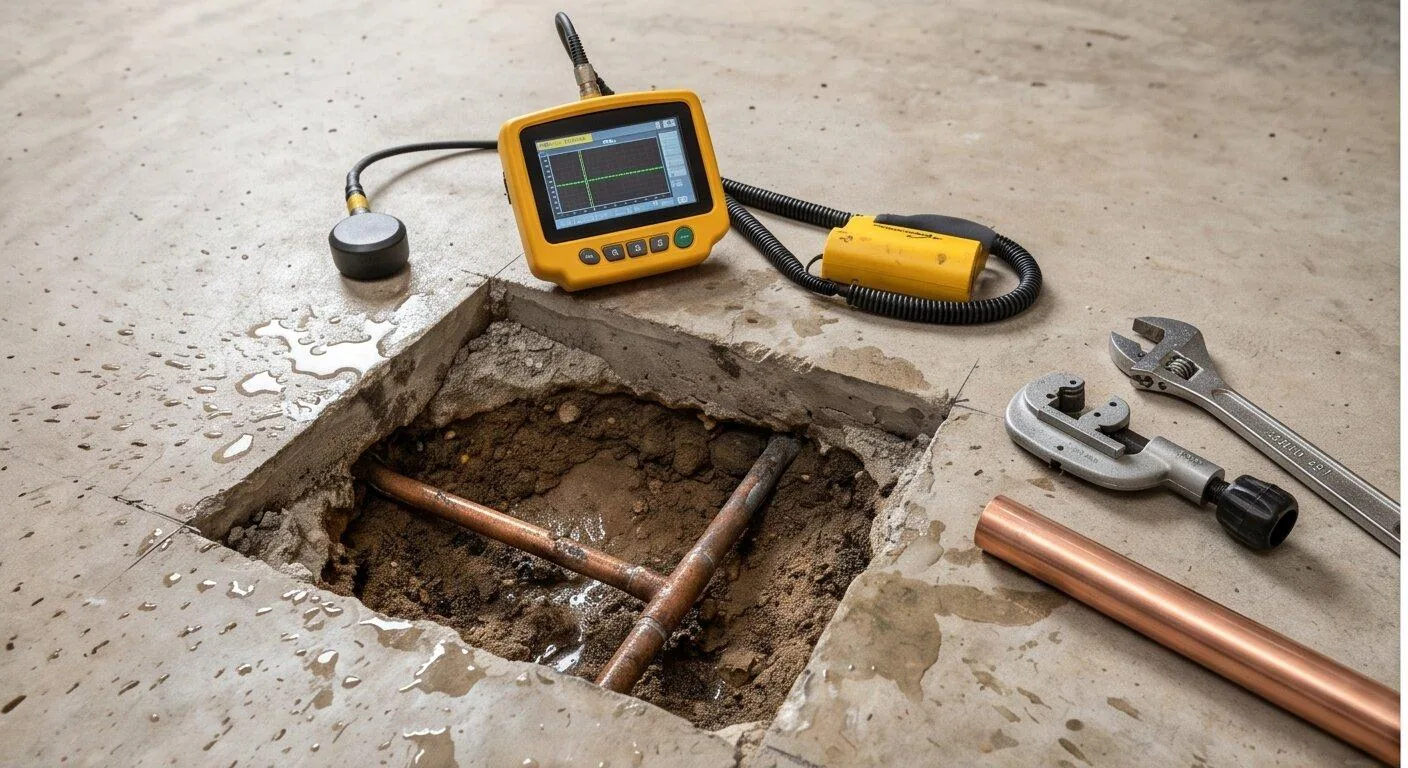
Most expensive leaks are the ones nobody can see. When the stain is not where the pipe is, guessing means opening walls in several places. Detection work narrows the search first, so the opening that follows is small and in the right spot.
Electronic and acoustic equipment listens to a pressurized line and picks out the hiss of escaping water. Infrared scanning and helium tracer gas are options for lines that are hard to reach. Thermal imaging reads temperature differences behind drywall, which helps on hot-water lines. A pressure test isolates a section of pipe to show whether it holds. A camera looks inside drains. A plumber serving your area chooses the combination that fits the symptom.
| Method | Suits | Limit to know about |
|---|---|---|
| Acoustic listening | Pressurized supply lines, in walls, floors and yard lines | Background noise from traffic or running appliances can mask a quiet leak |
| Thermal imaging | Hot-water leaks and wet insulation behind drywall | Cold-water leaks show less temperature difference |
| Pressure test | Confirming whether a line or a whole system loses pressure | Shows that a leak exists, not exactly where |
| Drain camera | Cracks, offsets and roots inside drain lines | Only reaches lines that can be entered through a cleanout or fixture |
Not sure whether it is a leak?
Describe the stain, the sound or the bill, and dispatch will tell you which visit fits.
Signs of a hidden leak before the damage shows
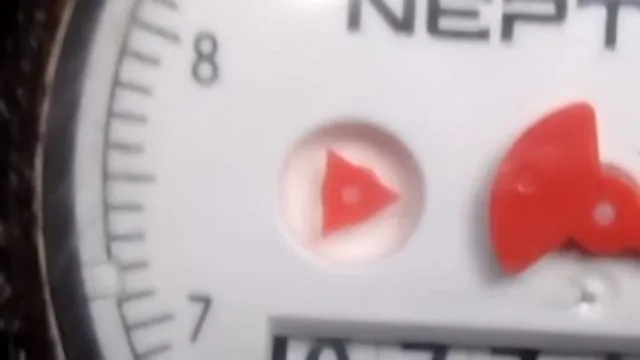
The quietest sign is the water bill. A bill that climbs with no change in how many people live in the house usually means water is going somewhere. The water meter confirms it. With every tap and appliance off, watch the small low-flow dial or leak indicator on the meter for a few minutes. If it keeps turning, water is moving through a pipe somewhere.
Once the meter shows water leaving, the next question is which side of the property line holds the leak. A bill dispute starts with the water provider. In Lansdale, Souderton and parts of Skippack Township the provider is North Penn Water Authority, and a meter reading that looks wrong is worth raising with whoever is named on your bill before any digging starts.
Toilets leak silently more often than any other fixture. Put a few drops of food coloring in the tank, wait fifteen minutes without flushing, and look at the bowl. Color in the bowl means the flapper is leaking, and that dye test is the first check for a silent toilet leak. High humidity can also hide leaks, because damp air makes a wet wall feel normal.
Underground leaks on the yard side show up differently. A soggy patch in dry weather, a strip of unusually green lawn, a damp driveway edge or pressure that falls at the outdoor spigot all point to a buried line. Those jobs belong with the water line repair page.
Common leak locations
- Under kitchen and bathroom sinks, at the trap and the supply connections.
- Behind and beneath toilets, at the supply line and the wax seal.
- At water heater connections and the relief valve discharge.
- At washing machine hoses and the valves behind them.
- In ceilings under upstairs bathrooms, where a drain or supply line has loosened.
Signs worth acting on:
- A musty smell in a closet or room that has no obvious moisture source.
- Water that takes longer to reach a faucet, or pressure that drops without warning.
- A warm patch on a floor, which can mean a hot-water line leaking under it.
- Wallpaper or paint peeling in a spot far from any tub or sink.
- Sprinkler and irrigation leaks are a separate trade, handled by irrigation contractors.
Leaks inside walls, ceilings and under the house
A wall leak behind a bathroom or kitchen often follows the pipe downward, so the visible stain sits one floor below the cause. A plumber who finds the source marks the location and notes it in writing, which also helps if an insurance claim follows. Thermal imaging and a moisture meter trace the wet area back toward its source. When the source is found, repair usually means a small opening and a patched section rather than a gutted wall.
Leaks under a house depend on what the house sits on, and that has to be confirmed first. A basement, a crawl space and a concrete slab each hide leaks differently, and no single answer applies to every home in the Harleysville area. A plumber looks at what is actually there, checks the visible pipe runs and tests the lines before recommending anything.
Fixture leaks in toilets, faucets and showers
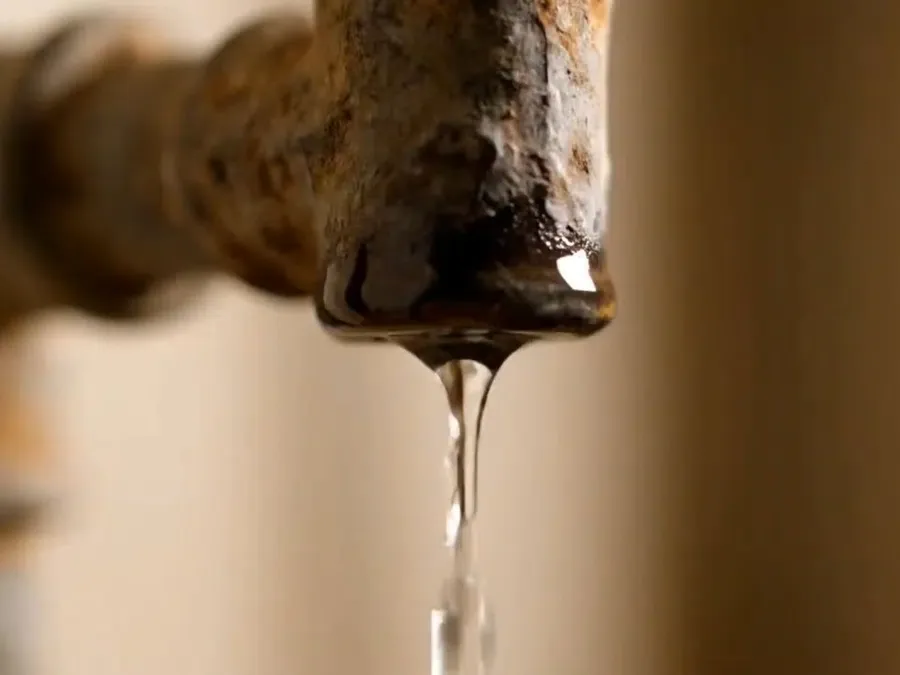
Not every leak is hidden. A toilet that runs after flushing, a faucet that drips from the spout or base, and a shower valve that weeps behind the handle are common, and they waste water day after day. Most come down to a worn seal, cartridge or flapper. Replacement parts are inexpensive compared with the water they waste, and the fix is usually quick. The faucet and toilet repair page covers those jobs in detail.
Plumbing inspection and pipe condition checks
A leak is sometimes the first sign of a pipe that is wearing out. After a repair, a plumber can look over the exposed pipe, the fittings and the shut-off valves for corrosion, mineral buildup and old patches. If the pipe is failing in several places, the conversation moves toward repiping and pipe repair instead of repeat visits for single leaks.
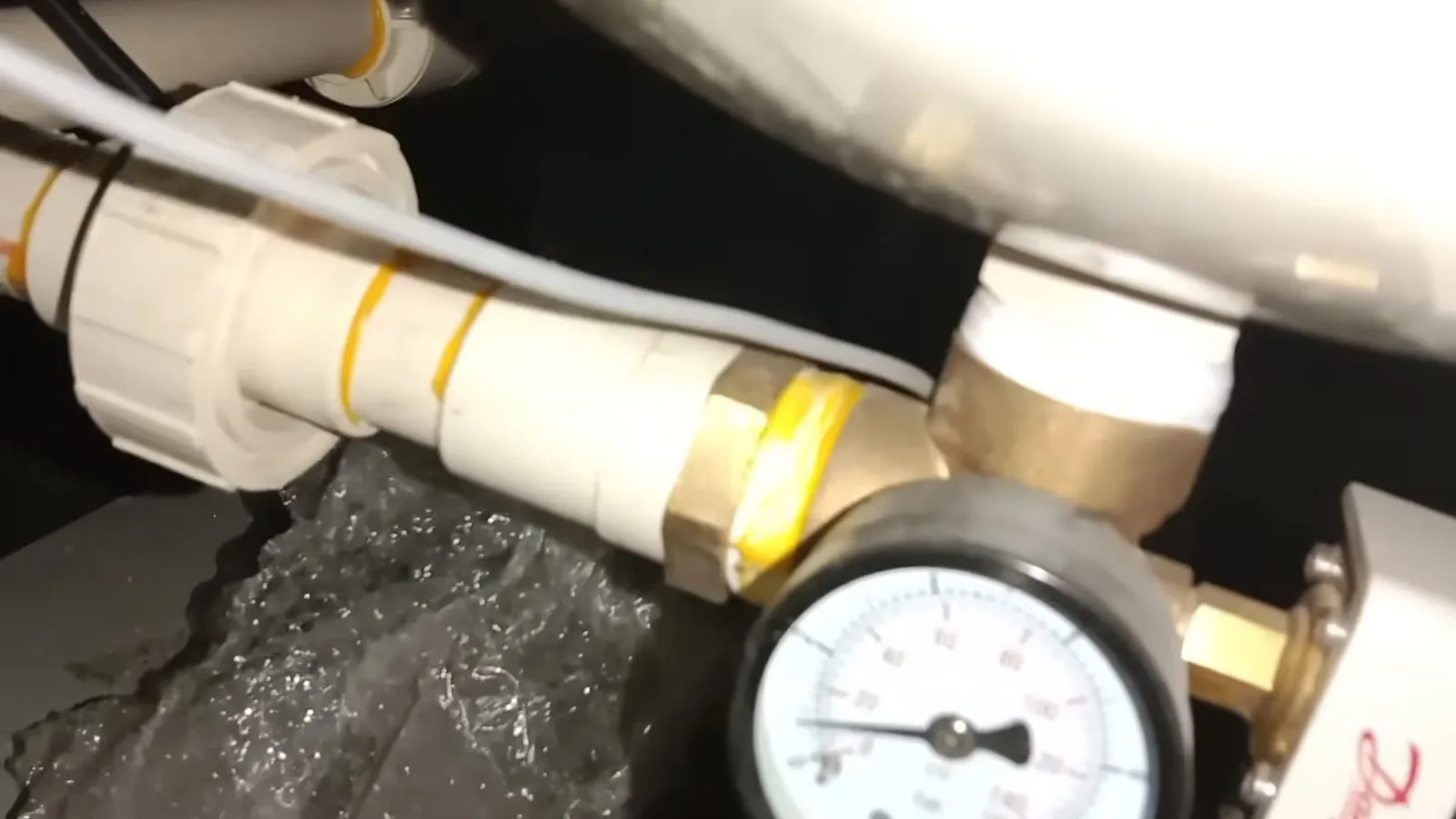
Pressure testing is the tool that settles the question. A plumber isolates a section, raises pressure to a set level and watches the gauge. A line that holds is cleared. One that falls points to a leak somewhere in that run, even before any water shows.
When a leak has already caused damage
Stopping the leak is only the first half. Wet drywall, insulation and flooring need drying quickly, and mold can start where moisture sits. When damage is already there, the next step is water damage restoration, which covers water removal and drying. If the leak is on the pipe running from the street to the house, service line repair explains that work. A leak under the floor of a house built on concrete is covered under slab leak repair.
Local rules apply to the repair itself. In Souderton, replacing pipe counts as permit work, so the borough office is the first call there. Other municipalities in the service area set their own rules, and the plumber can tell you which office to ask. For urgent calls at any hour, the 24/7 dispatch line is open.
Leak with no obvious source?
Call and describe what you see, hear or read on the meter.
Questions about finding and fixing leaks
What should I do about a leak coming through an attic or ceiling?
Start with this short checklist. 1. Turn off the water at the main valve if the stain is growing. 2. Move belongings and place a bucket under the drip. 3. Switch off power to the room if water is near a light fixture. 4. Photograph the stain. Do not poke a hole in the ceiling unless water is pooling, because a controlled drain is safer than a collapse.
Can a suspected leak behind a garage wall wait until morning?
If the meter is turning with every fixture off, or the wall is visibly wet and spreading, call now and close the main valve while you wait. If the wall is damp but not growing, you can wait for a daytime visit as long as the water stays shut off at that line, and you photograph the area so growth is easy to spot.
How can I tell whether a leak is in my house or on the water provider's side?
Turn every tap and appliance off and check the meter. A moving dial means water is escaping after the meter, on your side. If the meter is still, the water is probably not leaking from your piping. For a billing question, contact the provider on your bill; The provider in Lansdale, Souderton and parts of Skippack Township is North Penn Water Authority.
Leak somewhere you cannot find? Call and describe it
Dispatch listens to the symptoms first and matches the visit to what you describe.
- Licensed and insured plumbers
- Same-day service when available
- 24/7 emergency dispatch