On-Demand Hot Water: Tankless Installation and Service in Harleysville
Water supply differs across the Harleysville area: North Penn Water Authority serves Lansdale, Souderton and parts of Skippack Township, while other addresses are served by different providers. That matters for a tankless unit, because the water running through its heat exchanger affects how often it needs cleaning.
- Licensed and insured plumbers
- Same-day service when available
- 24/7 emergency dispatch
What a tankless heater changes in a house
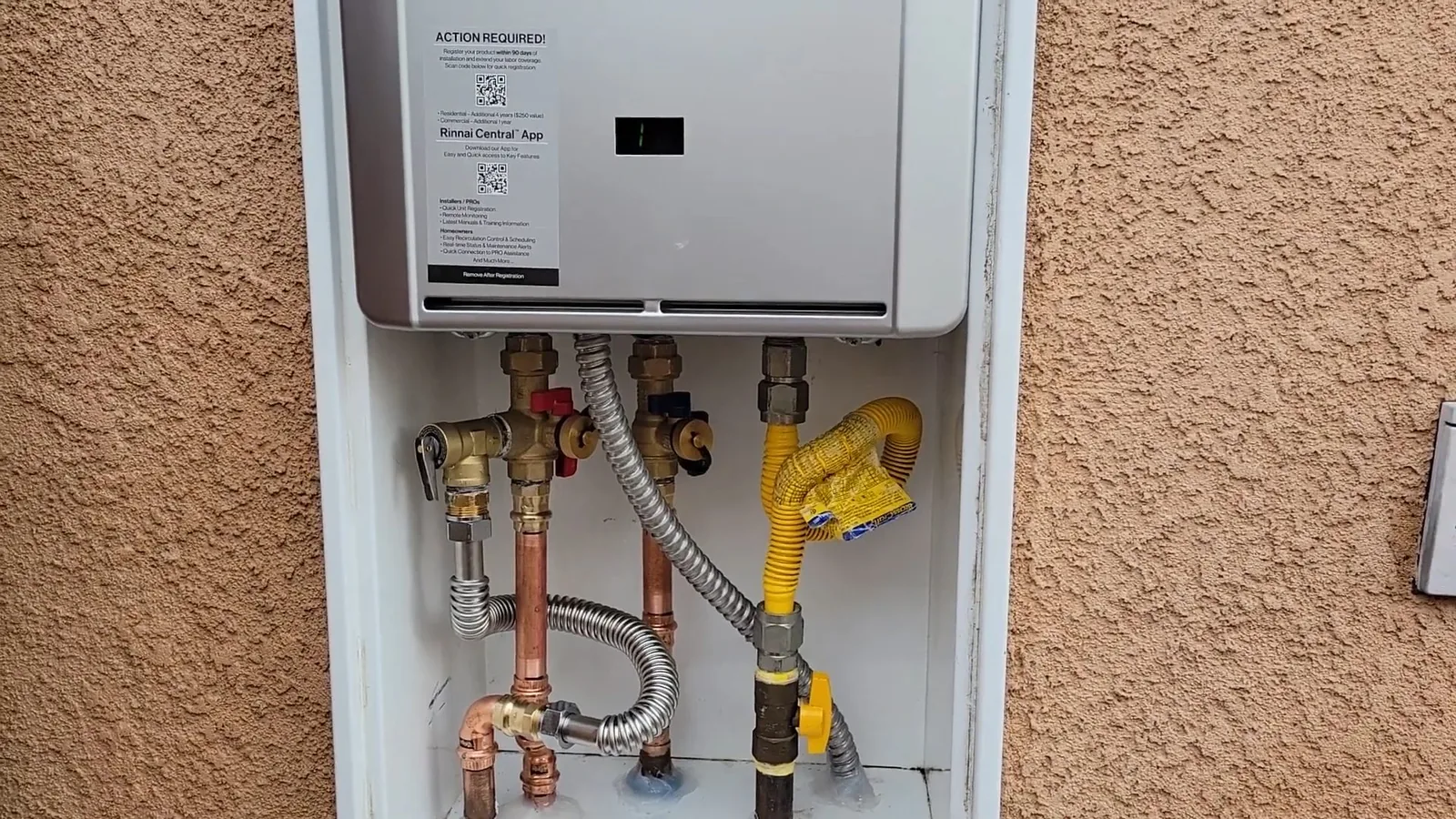
A tankless heater warms water only when a tap opens. There is no tank to fill, no standby heat to maintain and no flood risk from a rusted vessel. In return the unit has to heat water quickly, so it needs a strong burner or a high electrical load, and a gas line or circuit that can supply it.
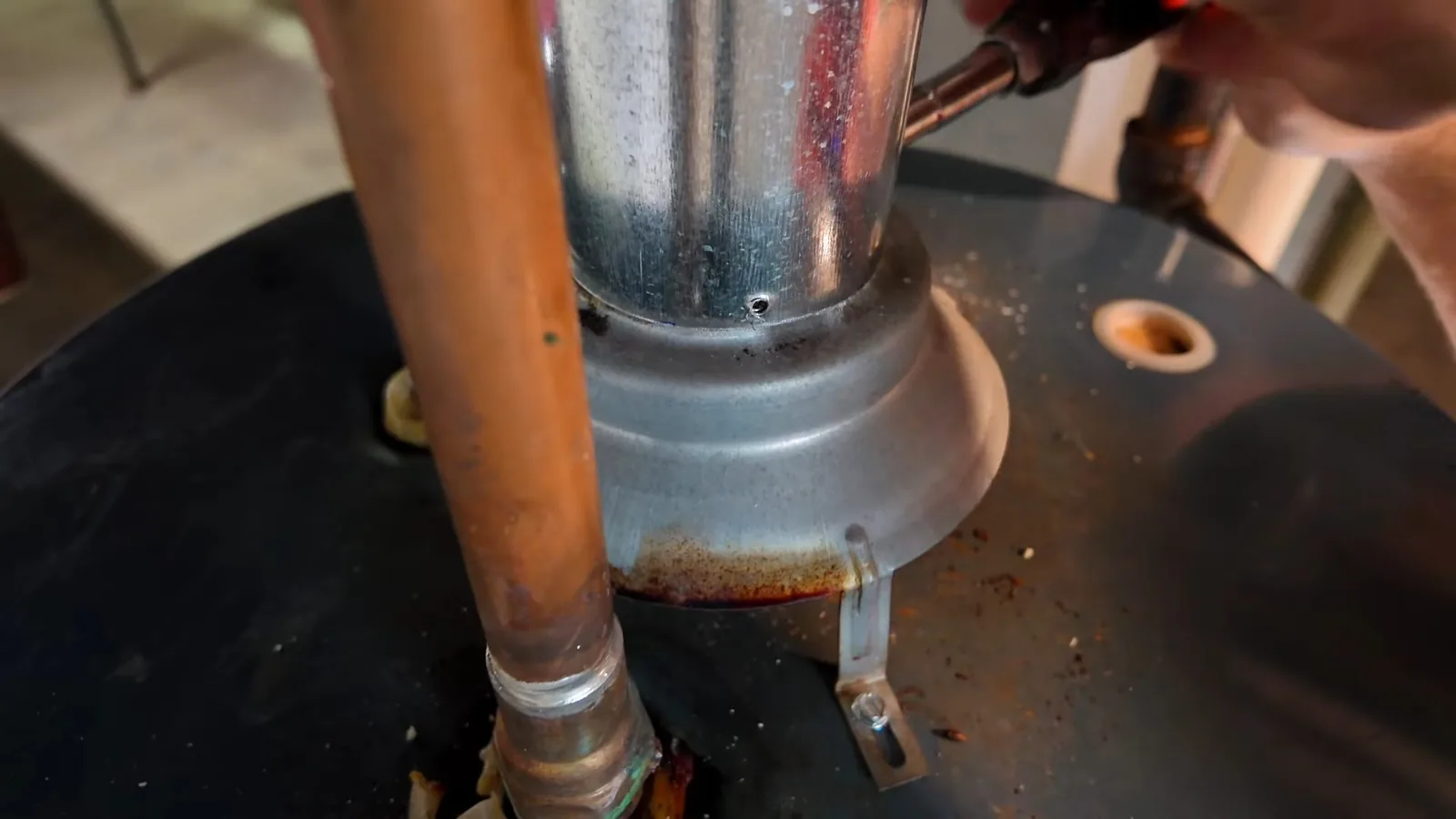
The change is more than the heater. A tank sits on the floor with a simple vent. A tankless unit hangs on a wall, uses a sealed or power-vented flue, and often needs new gas pipe sizing, a condensate drain and a service valve set that makes flushing possible.
Is a tankless conversion right for your home?
| Question | Tankless | Tank |
|---|---|---|
| Hot water supply | Continuous while the unit keeps up | Limited by the tank, then recovery |
| Space needed | A wall mount | A floor footprint |
| Gas or electric demand | High, sometimes a larger line or circuit | Modest |
| Maintenance | Periodic descaling and filter checks | Flushing and anode rod checks |
| Installation work | Often larger, with venting changes | Usually a direct swap |
Homes with several bathrooms in use at once, or with a tub that takes a long time to fill, usually gain the most. A small household with modest demand may see little benefit and face a larger installation. A plumber can walk the layout and tell you which side of that line you are on.
Gas or electric: sizing the supply
Gas models need enough pipe capacity to feed the burner at full firing rate. An older half-inch line that served a small tank often cannot, and the pipe has to be upsized. Electric models can draw a large load, and an older panel may need work before a unit can be wired in. Check both before choosing a model.
Flow rate decides the unit. Count how many fixtures might run together, work out the temperature rise from incoming water to the setting you want, and match that to the unit's rated output. Winter incoming water is colder, so size for that season instead of summer. The gas line sizing guidance explains how a plumber measures the pipe and the load.
Want the supply checked before you buy?
Call and ask for a visit to look at the gas line, panel and venting.
Venting, condensate and where the unit can go
Condensing tankless heaters pull heat from their exhaust and drain acidic condensate. That water needs a neutralizer and a drain path. Non-condensing units run hotter and use a different vent material. The location also matters for freeze protection, so an unheated space calls for a model rated for it or a different spot.
- A vent path that fits the model, with clearances from windows and doors.
- A condensate drain and a neutralizer where the model requires them.
- Service valves so the unit can be flushed.
- A pressure relief valve and discharge line where required.
- Power for the controls, even on a gas model.
Descaling and flushing: why tankless units need service
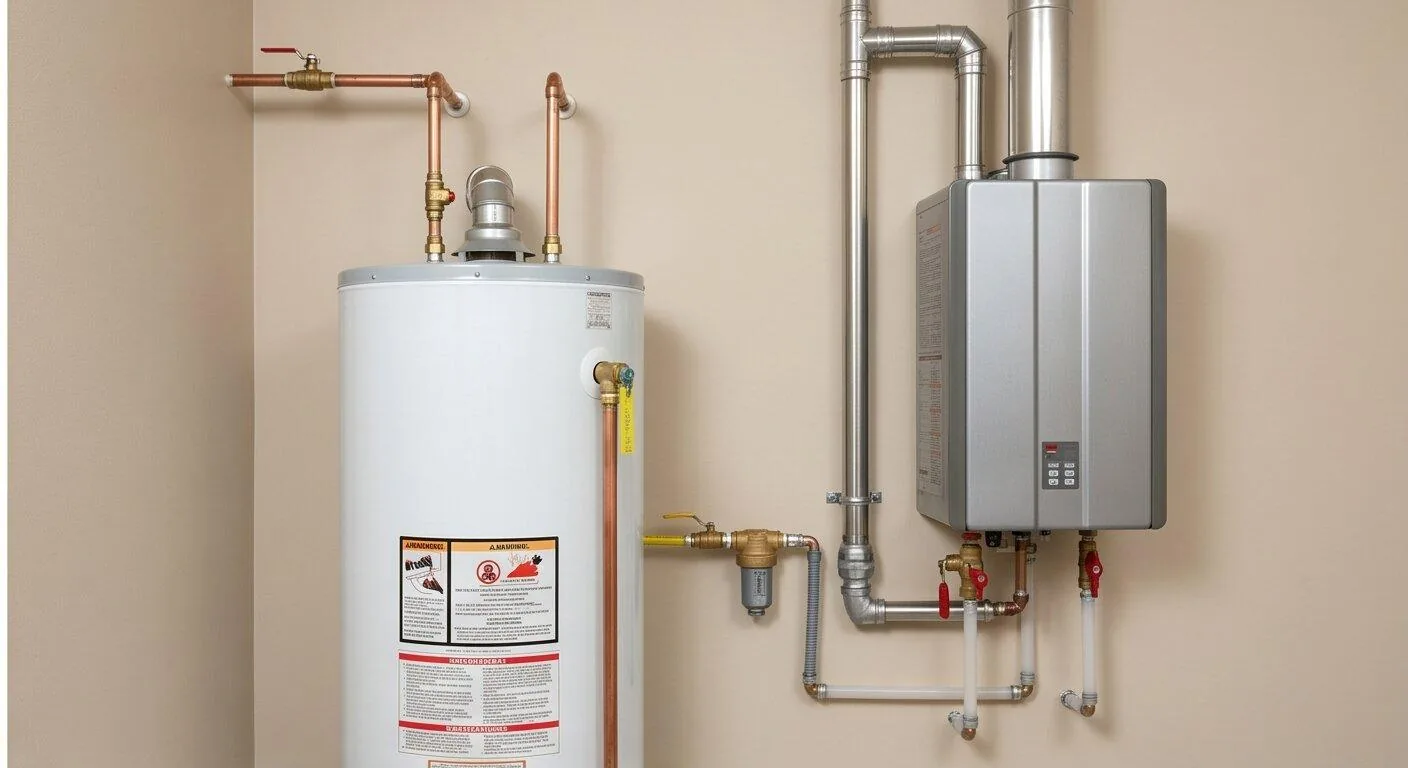
Minerals in the water coat the heat exchanger over time. The unit works harder, the output water cools, and error codes appear. Flushing with a descaling solution through the service valves clears the buildup, and an annual interval is a common starting point. If your supplier publishes water quality figures, ask the plumber how they affect the schedule.
Brands differ in controls, venting parts and how easily a plumber can get replacement parts, so ask which makes a plumber services regularly before you choose one. A softener upstream of the heater reduces the buildup, and the water softener and filtration page explains the options. Skipping descaling is the most common reason a young tankless heater fails early. A flush visit also lets the plumber check the inlet screen, the vent, the burner and the condensate line, and it keeps the warranty in order where the maker requires records.
Repair and troubleshooting
Most service calls come down to a few causes. A cold-water sandwich, where hot water turns cold briefly before warming again, points to flow or settings. An error code that repeats after a reset usually names a failed sensor, igniter, flame rod or fan. A unit that shuts down on low flow may have a clogged inlet screen or a restricted vent.
If the heater has failed outright, the water heater repair page covers repair of tank units and the tank replacement page covers swapping back to a storage tank when conversion is not practical.
Permits for larger work
Moving from a tank to a tankless unit can involve new gas piping, new venting and an electrical change, and those parts often trigger permits. Pennsylvania uses a statewide construction code that each municipality enforces on its own terms. In Souderton, the borough office treats anything past a simple fixture swap as permit work.
Limerick Township homeowners start with the township's code department, which keeps a plumbing permit form for residents. For an address elsewhere, phone the local municipal office, or let a plumber who works in that town describe what the inspector will want to see.
Planning the switch from a tank
- Walk the house with a plumber and list the fixtures that run at the same time.
- Choose gas or electric based on what the building can supply.
- Confirm vent routing, condensate drainage and a suitable location.
- Schedule the install and any permit or inspection with the municipality.
- Set up the first descaling visit before the unit is a year old.
Ready to schedule a tankless install?
Describe the house and the current heater and dispatch will plan the visit.
Tankless water heater questions
Will a tankless heater work with my existing gas line?
Often the line has to be upsized, because a tankless burner draws far more gas than a tank. A plumber can measure the run and the meter capacity and tell you what changes are needed before you buy the unit.
How often should a tankless water heater be flushed?
Once a year is a common interval, and more often where the water leaves heavy mineral deposits. Ask the plumber to check the exchanger and the inlet screen at the same visit.
Can I keep my tank heater and add a tankless unit for one bathroom?
A small point-of-use unit can serve a distant fixture, but a whole-house tankless heater replaces the tank. The right choice depends on pipe runs and demand, which a plumber can check on site.
Why does my tankless heater give cold bursts in the middle of a shower?
This is often called a cold-water sandwich. It can come from flow settings, a clogged screen or a unit that is working at its limit, and a service call can pinpoint which.
Thinking about going tankless?
Share your fuel, your current heater and how many bathrooms you run at once, and dispatch will plan a visit.
- Licensed and insured plumbers
- Same-day service when available
- 24/7 emergency dispatch